The mainstream of Hangang River flows, and based on Yeongwol-eup, the water system flowing on the north is called Donggang River (mainstream of Hangang River) and the water system flowing on the west is called Seogang Rivern (Pyeongchanggang River).
The 2 water systems meet at Hasong-ri, Yeongwol-eup to flow past Gakdong-ri and Chungjuho Lake to flow into Hangang River.
These streams have plenty of water, andflows like a snake slithering while high and low mountains are interlocking as if they are competing against each other. In the river basins of Yeongwol, the nature of ecosystem is well preserved, the history of geographical features and living species is very long, and uniqueness of species is vary high, thus having high ecological values.
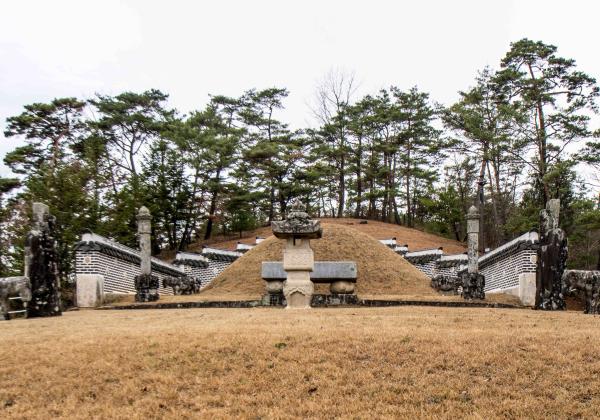
Located at the downtown of Yeongwol, Jangneung is the place where King Danjong, the 6th king of the Joseon Dynasty (reigned 1452–1455) is buried. After his father King Munjong passed away only two years after succeeding the throne, King Danjong took the throne when he was just 12 years old. However, his uncle Grand Prince Suyang deprived him of his throne in three years and killed him.
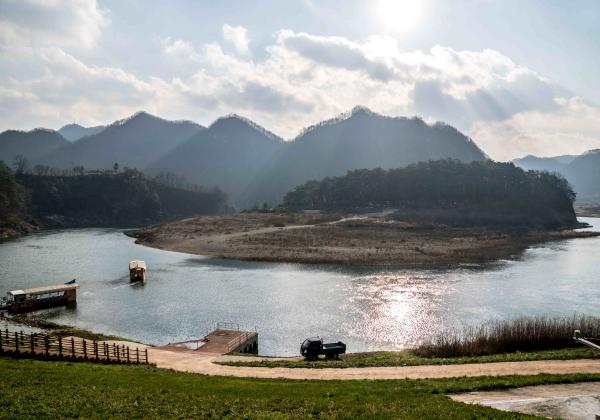
As a place where King Danjong stayed after being deprived of the throne and exiled to Yeongwol, it is a place where beautiful pine trees are densely packed, the Yukyukbong Peak stands in the west, and the three sides are surrounded by a deep river. Thus, it is like an island that cannot be accessed without using a ferry.
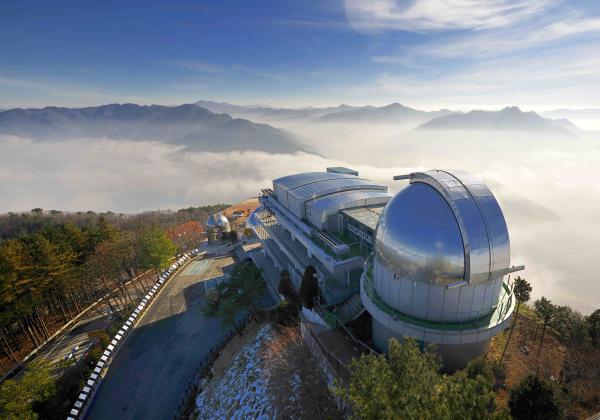
Its name is a compound word that combines the word “Byeol”, which means 'a star,' a pure Korean word ‘maru,’ which means the top, and ‘ro,’ which means quiet, combined together to mean ‘a quiet summit to see the stars'. The observatory is located at the top of Bongraesan Mountain at the elevation of 800m, where Donggang River and Sogang River meet.
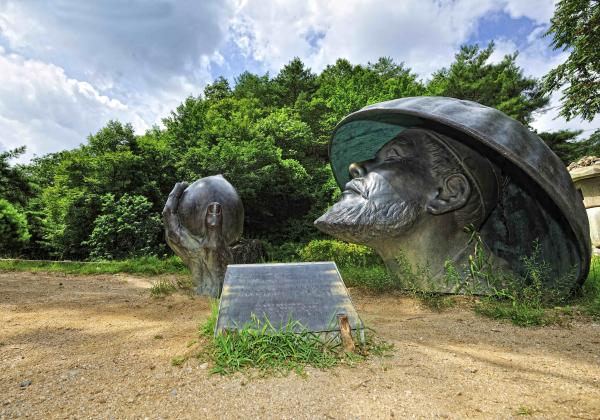
It is a place where you can get a glimpse of the life and literary world of Nango Kim Satgat (real name Byeong-yeon, 1807 – 1863). It was created in 2003 as part of the 'Gangwon's Sprit Promotion Project' in honor of his achievements and to re-examine his literary soul. You can visit Nango Kim Byeong-yeon’s tomb and residence, Nango Kim Satgat Memorial Hall, and the Sibi Park.
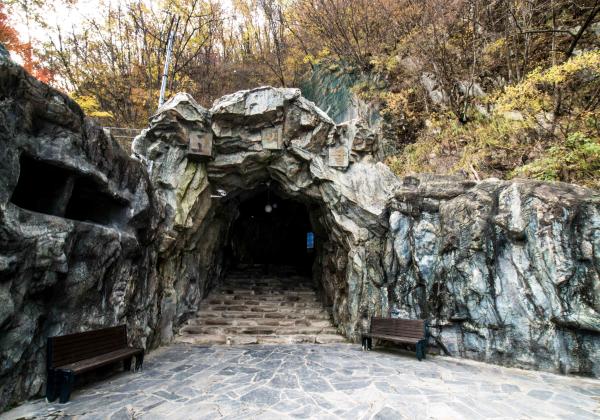
Gossigul Cave where you can see the mystery of 400 million years got its name because it is where Go family fled for refugee during the Japanese invasion of Korea in 1592.
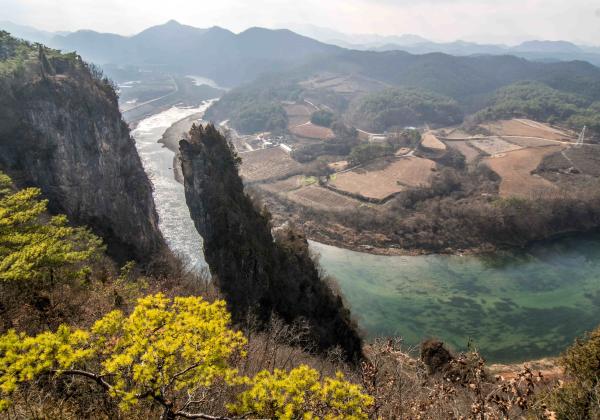
Walking about 100m following the road signs from the Sonagijae Pass, the gateway of Yeongwol, you will see strange rocks and bizarre stones appearing with a river bent in L-shape. This is the Seondol Rock Pillar. The cliff, looking as if it is split into two with a big sword, blends with the blue Seogang River to remind us of an ink-and-wash painting.
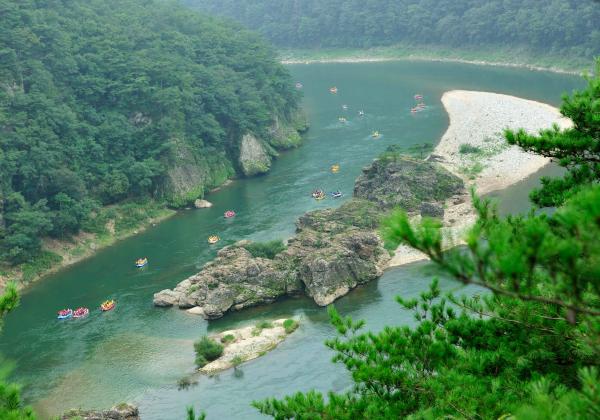
The Yeongwol Eorayeon Valley, which belongs to the upstream of the Donggang River, is famous as the most beautiful scenic spot among the many unexplored regions of the Donggang River and was designated as the Scenic Site No. 14 in 2004. The Joyanggang River, which flew from Jeongseon Auraji Lake, joins the Namdongcheon Stream in Gasu-ri, and goes through Pyeongchang to become the Donggang River in Yeongwol.
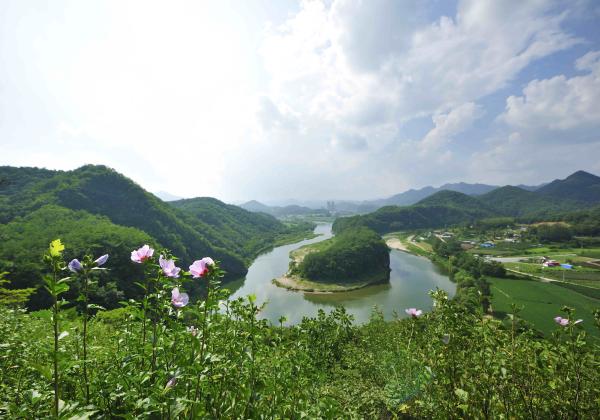
If you go to Yeongwol, there is a place whose topography looks exactly like the entire Korean peninsula. It is the topography of the Korean peninsula in Seonam village. It is surrounded by the sea on three sides, high on the east and low on the west, to look very similar to the topography of the Korean peninsula that one can feel mystery beyond being surprised.
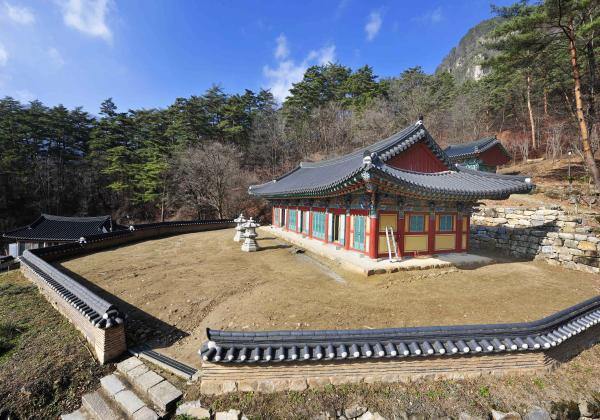
Founded by Buddhist Monk Jajang Yulsa around the year 643, during the reign of Queen Jindok of Silla Dynasty, Beopheungsa Temple is one of the five great shrines that enshrines Buddha's Shakyamuni sarira. Beside the stupa, there is a cave where Buddhist Monk Jajang Yulsa used to practice asceticism.
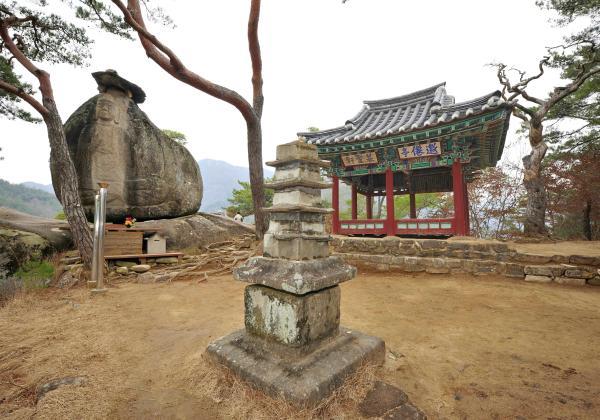
It is the place that Won, Kwak, and Lee of the village erected to enshrine Eojesi (poem) by King Sukjong, and its name comes from the word “Yoseonam” engraved on the rock of Seonnyeotang by the poet Bongnae Yang Sa-eon during the middle of the Joseon Dynasty. Next to Yoseonjeong Pavilion, there is Seated Yeorae image carved on rock surface of Mureung-ri, the Gangwon-do Tangible Cultural Property No.74.








 KBF ALL RIGHTS RESERVED.
